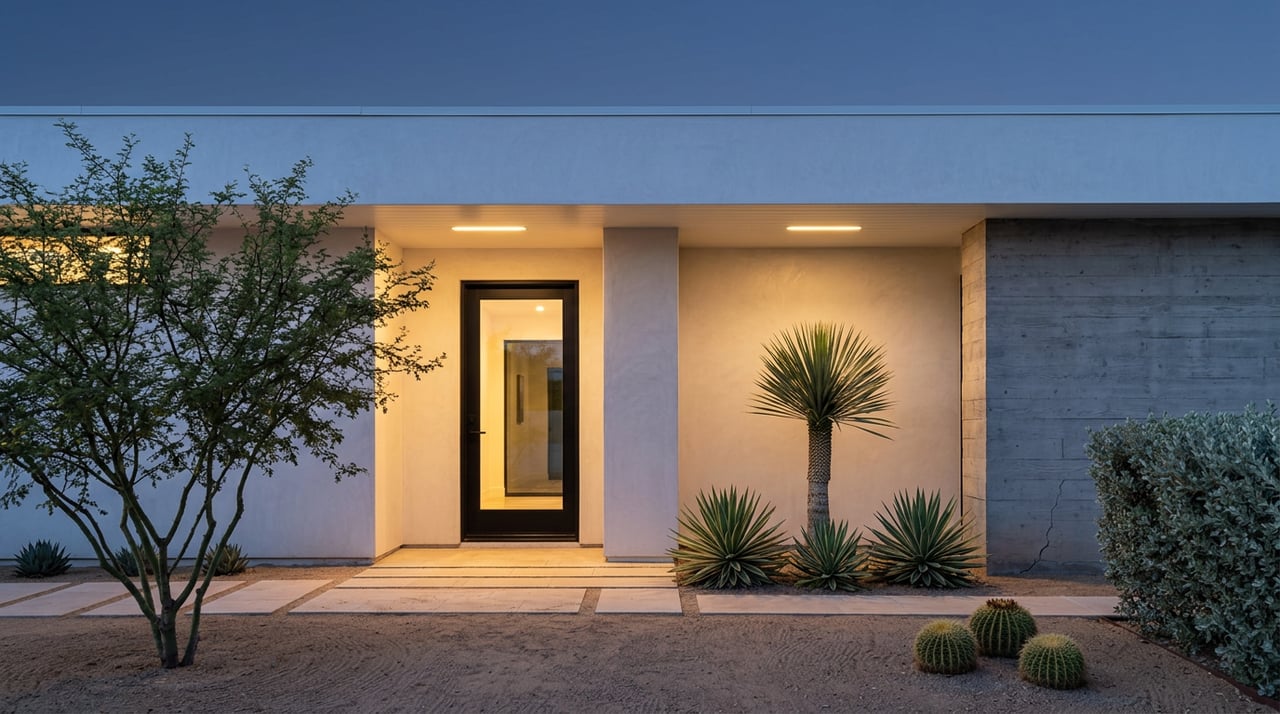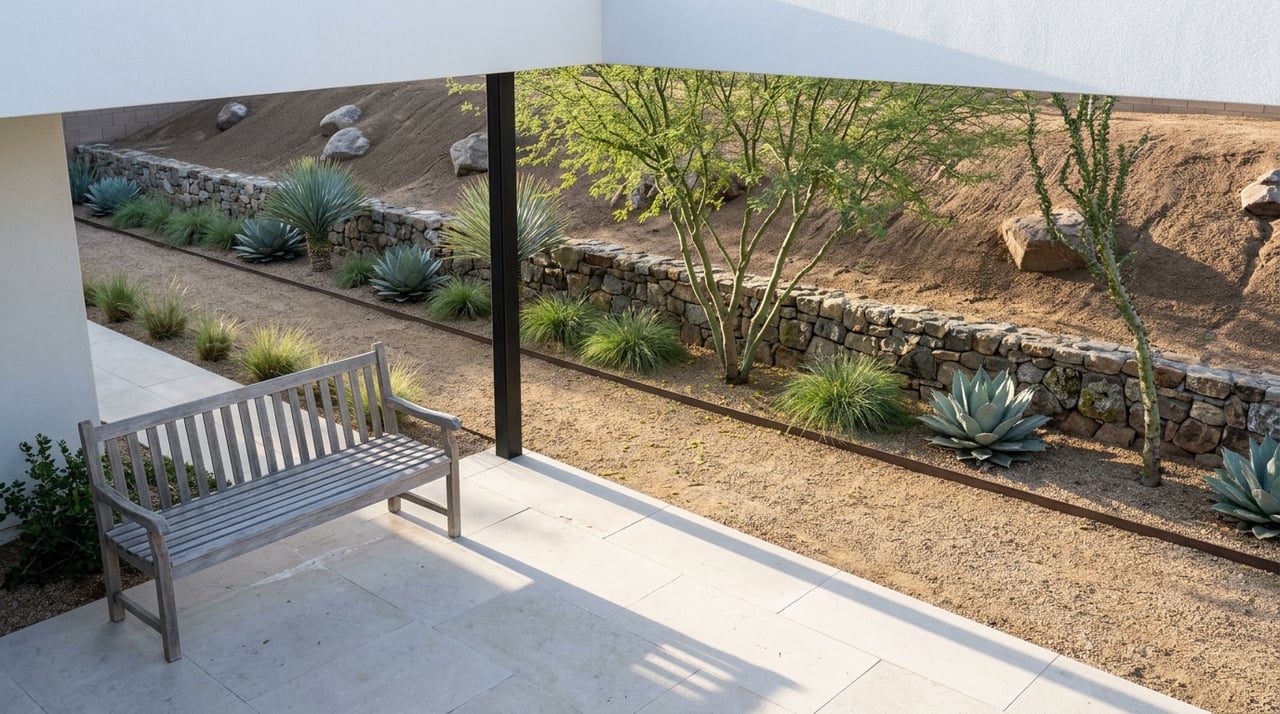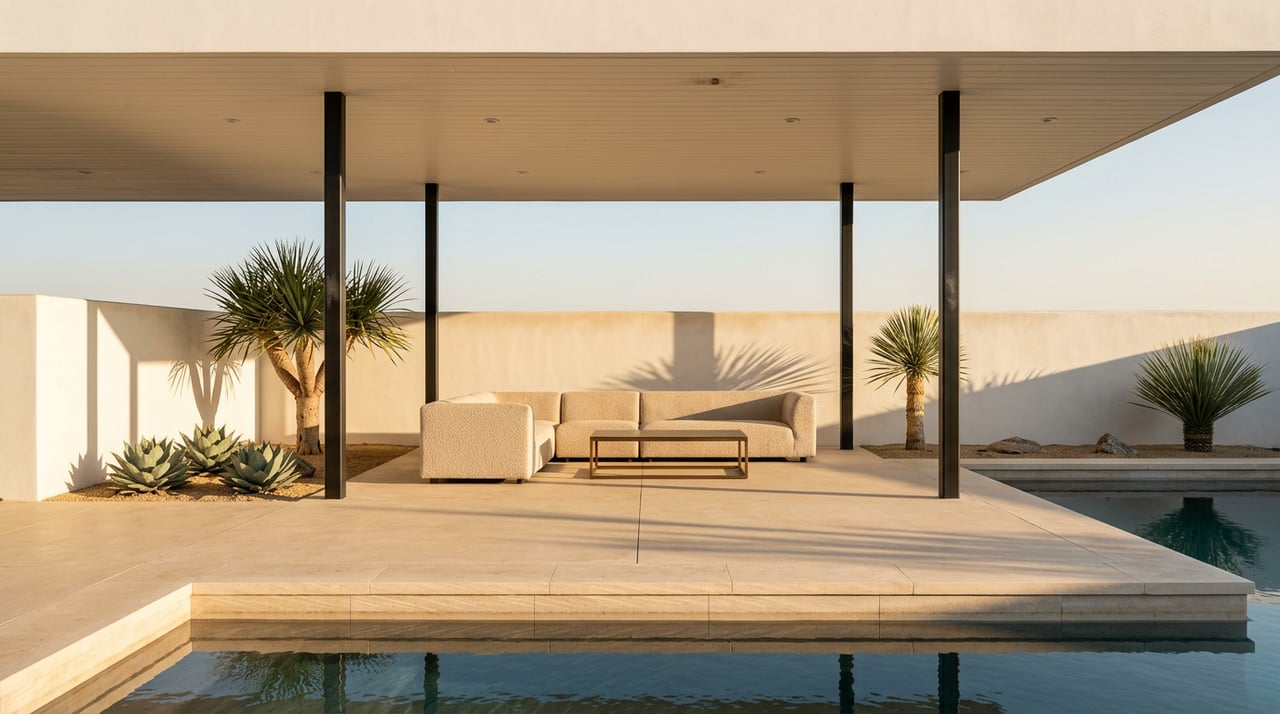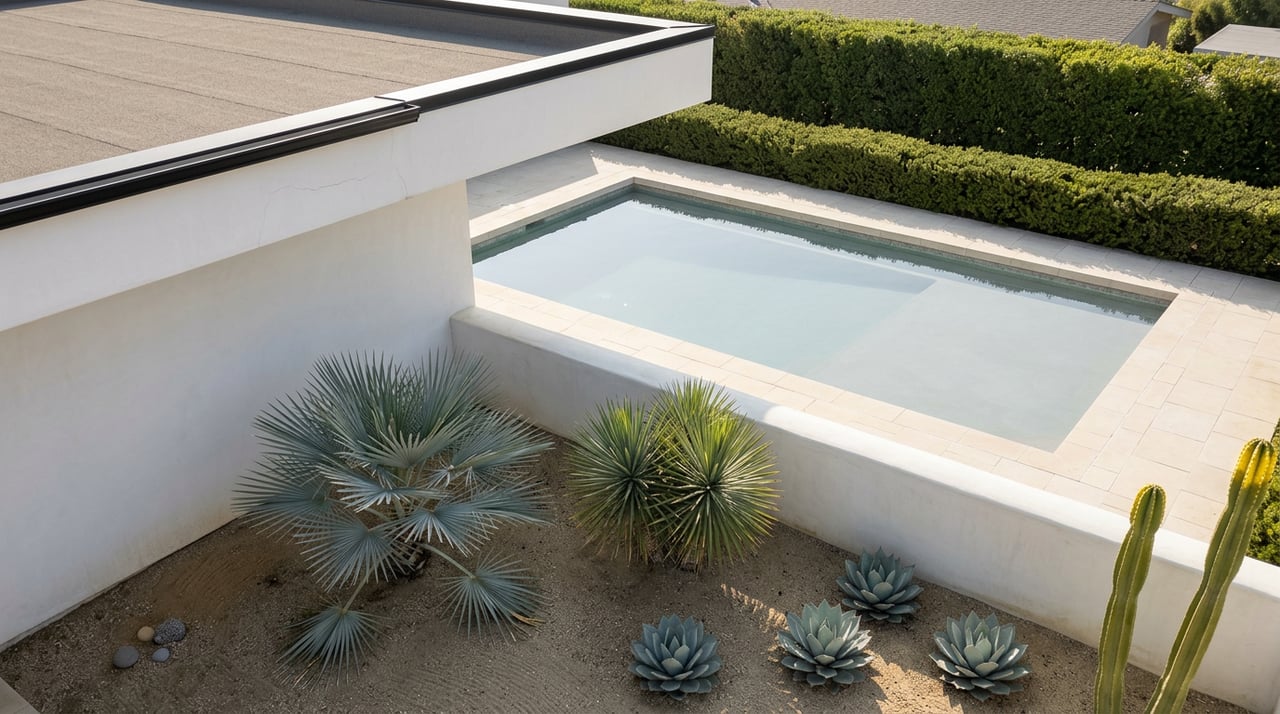
The portals will tell you the median price at The Hideaway. They will not tell you that the number on the listing sheet is only half the transaction. Inside these gates, a home purchase and a golf membership are two separate contracts with two separate price tags, and the interaction between them is the reason a 3,000-square-foot bungalow and an 8,000-square-foot custom estate can trade at price-per-square-foot figures that look, on paper, almost unrelated.
For buyers comparing La Quinta's private-club communities, that split is the mechanism worth understanding before touring a single property.
The purchase is really two transactions
The Hideaway sits on roughly 600 acres between PGA West and Mountain View Country Club, opened in the early 2000s under Discovery Land Company, and transitioned to a member-owned club in June 2021. That governance change matters at the closing table. The homeowners association and the golf club are now aligned under member control, but they are still distinct commitments with distinct entry costs.
Equity Golf Membership is capped at 450 and carries a $175,000 contribution according to the club's own membership page, with monthly dues and annual capital dues on top. When a member sells, the standard structure at The Hideaway is a 50 percent equity return and a 50 percent transfer fee at the time of membership sale, a mechanism third-party summaries of the club have described consistently. Membership is not automatically bundled with the deed. A buyer can close on a home at The Hideaway without a golf membership and use only social access, and a seller with a membership can transact the two separately.
The takeaway: the number you see on the MLS is the house. The membership is a second line item, negotiated on its own timeline, with its own return-of-capital math at resale.
That is why a $4 million listing and a $7 million listing inside the same gate can be closer in true cost than they appear, and why two custom homes on adjacent fairways can price differently based on whether the seller is conveying, transferring, or unwinding a membership alongside the real estate.
Four product types, four different pricing logics
The Hideaway's 446 residences are not a single housing stock. They break into four product categories, and each carries its own square-footage band, location logic, and buyer profile. A single price-per-square-foot average across the community obscures more than it reveals.
| Product type | Typical size | Location within the club | What the price reflects |
|---|---|---|---|
| Custom estates | ~2,800 to 8,000+ sf | Along both the Clive Clark and Pete Dye fairways | Lot premium, architect pedigree, view corridor, and finish level |
| Villas | 2,637 to 3,293 sf | Along the 4th and 5th fairways of the Clive Clark course | Turnkey lock-and-leave with private pool, spa, and attached garage |
| Bungalows | 2,703 to 3,078 sf | Short walk to the 51,000-square-foot clubhouse | Proximity to amenities, shared courtyards, lower maintenance |
| Custom lots | ~⅓ to ½ acre | Fairway frontage on both courses | Build cost, design review timeline, membership pairing |
The size overlap between villas and bungalows is the tell. Two properties can be within a few hundred square feet of each other and price on entirely different logic, because one is trading on fairway views and pool privacy while the other is trading on the fifty-yard walk to breakfast at the clubhouse. Neither number is wrong. They are answering different questions.
Why the early 2026 snapshot looks strange
A January 2026 read of active inventory at The Hideaway showed roughly four listings on market, an average of 49 days on market, an average of about $1,201 per square foot, and a median list price near $7.82 million. Trailing twelve-month sale data from public sources put the average sale price closer to $3.7 million and days on market between 70 and 97.
Those two data sets are describing the same community and do not contradict each other. They describe two different segments.
The active list is dominated by top-of-market custom estates on premium fairway lots, which is why the median list clears $7 million. The trailing average includes villas and bungalows that closed throughout the prior year at price points several million dollars lower. A buyer reading only the active median will assume The Hideaway is a $7 million community. A buyer reading only the trailing average will assume it is a $3.7 million community. Both are wrong in the same direction. The community trades across a range wide enough that segment selection, not neighborhood selection, is the pricing decision.
Longer days on market than the national baseline are also a feature of this market, not a defect. The buyer pool for a member-owned club in the East Valley is a specific one, and listings here tend to be priced for that pool rather than for velocity.
What changes at the negotiating table
Once a buyer understands the two-transaction structure and the product-type spread, a handful of specifics start to matter more than list price:
- Membership status of the seller. Whether the seller holds a current Equity Golf Membership, has already transferred it, or never held one changes the buyer's path to full club access and the timeline for reciprocal privileges.
- HOA rate by product type. Custom homes, villas, and bungalows carry different monthly HOA figures. Third-party summaries have quoted custom-home HOAs in the $600 to $900 range and bungalows above that. Verify the current schedule during escrow rather than at listing.
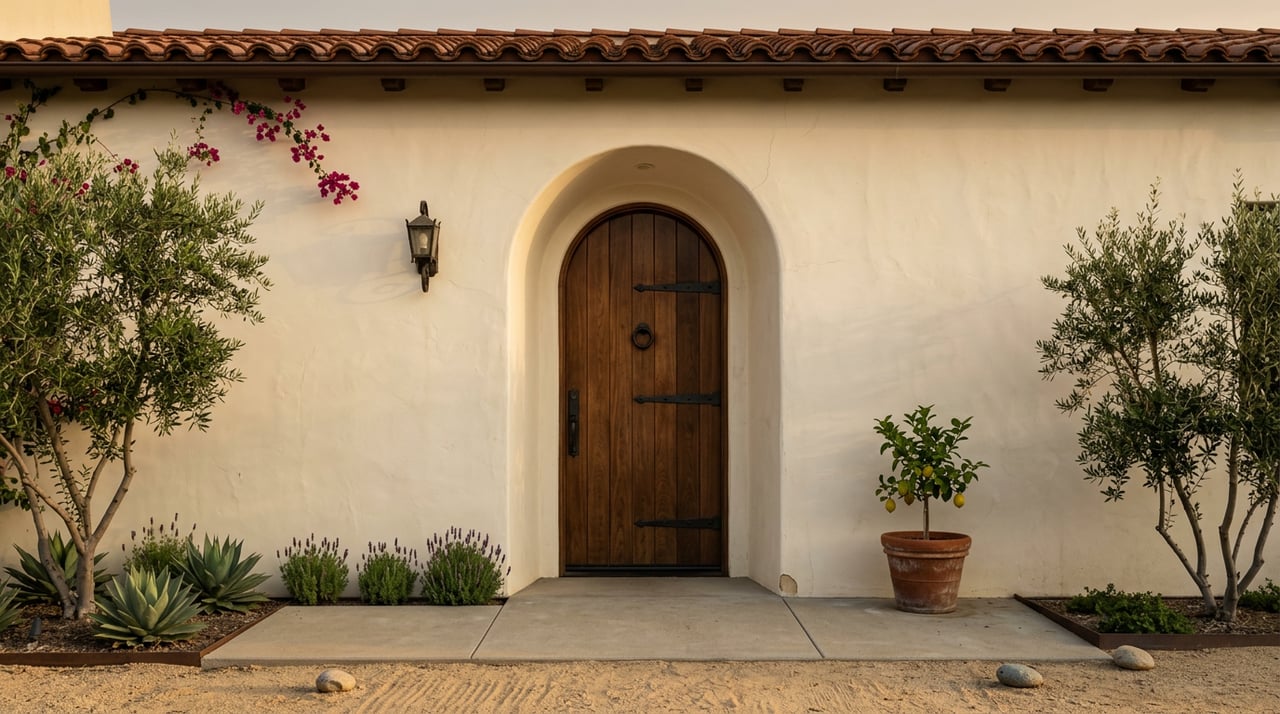
- Design Review Committee involvement. Custom homes and custom lots are governed by design guidelines rooted in the club's early California and Spanish Colonial Revival vocabulary. Any renovation or new build passes through the committee, which affects timeline and scope of work for buyers planning to remodel.
- Furnishings and turnkey scope. Villas and bungalows more often trade with furniture packages included. A furnished sale changes both the price and the tax posture and is worth pricing out separately.
- Amenity access during escrow. The club's amenity roster now includes the expanded Hideaway Instruction Performance Center, the Snicky Snack on-course stop, and The Key poolside cantina. Buyers touring in season should ask their agent to arrange access rather than relying on public tour days.
How The Hideaway compares inside 92253
For buyers cross-shopping The Hideaway with other La Quinta private clubs, the useful contrast is not amenity-by-amenity. It is membership economics. A member-owned club with a 50 percent equity return on membership resale behaves differently at exit than a club where the initiation is a pure fee. When comparison shopping, model out a ten-year hold with both a membership and no membership scenario. The number that falls out is closer to true cost than any price-per-square-foot figure a portal will surface.
If custom architecture and design provenance are the priority, our notes on evaluating architectural provenance in Coachella Valley homes apply here as well, adjusted for the Spanish Colonial Revival vocabulary that governs Hideaway design review. Buyers who want the private-club framework more broadly can start with our overview of La Quinta's private clubs and membership.
FAQs
Is a golf membership required to buy at The Hideaway? No. Ownership of a residence and equity golf membership are separate. Buyers can close on a home without taking membership, and third-party summaries note a social membership option for property owners at published annual rates. Confirm current terms directly with the club.
How does the 50/50 equity and transfer fee work on membership sale? When a membership is sold, half of the contribution is treated as returnable equity to the exiting member and half is treated as a transfer fee. The specific mechanics, order of the waitlist, and current contribution amount are set by the club and change over time.
Are the two courses interchangeable for a homebuyer's decision? No. The Clive Clark and Pete Dye courses have different playing characters, and fairway location on one versus the other affects both daily experience and resale positioning. Villas cluster on the Clark 4th and 5th, while custom estates line both.
Why do days on market look long compared to other Coachella Valley segments? The buyer pool for a member-owned club in the East Valley is narrow by design. Listings here are typically priced for match rather than turnover, and 70 to 90 days is a normal working range for well-priced inventory.
Plan the purchase around the mechanism, not the median
The Hideaway rewards buyers who understand what they are actually purchasing before they walk a fairway. That means pricing the home and the membership as two decisions, matching the product type to the actual use case, and reading the active-versus-trailing spread as segment information rather than market direction. Rich Nolan works with buyers and sellers inside the gate on exactly this analysis. Schedule a design-first marketing consultation to model your specific purchase or listing scenario before you write the offer.