A buyer comparing two Madison Club listings last spring found something odd. One agent's page quoted HOA dues near $2,100 a month. Another, for a similar property type, quoted something closer to $1,875. A third source, describing a villa rather than an estate, cited over $3,600 a month plus a separate quarterly assessment north of $10,000. None of these were typos. They were describing different products, different years, and in at least one case, different definitions of what counts as a "dues" figure versus a capital assessment.
That confusion is the whole story of comparing anything at Madison Club. The number everyone repeats, whether it's a $12 million closing or a $500,000 initiation fee, is the beginning of a conversation, not the end of one. Behind the gate on Avenue 52, two separate mechanisms are quietly doing more work than the sale price lets on: a membership and carrying-cost layer that shifts by six figures depending on what you're buying and who you ask, and a market that is really two markets running at completely different speeds under one name.
The Membership Number Depends on Who You Ask
The initiation fee at Madison Club is the one figure most sources agree on: roughly $500,000 to join, consistent across nearly every brokerage page and club summary published in 2026. Annual dues are where the agreement stops. One source describes dues around $60,000 to $75,000. Several others land on $70,000 flat. Another cites $85,000. A separate listing page, also dated 2026, puts golf dues at just $33,000 annually. That's not a rounding difference. It's a spread wide enough to change the cost of a decade of ownership by close to half a million dollars, depending purely on which page you happened to read.
HOA dues tell the same story from a different angle. Figures published across 2023 through 2026 range from about $1,039 a month on the low end to more than $3,600 a month plus a separate quarterly assessment on the high end, and the difference isn't entirely explained by inflation or by villa versus estate pricing. Some of it is simply that these numbers age fast and get copied forward without anyone checking whether the club has since revised them.
Membership itself carries its own gap that rarely makes it into a listing description. Madison Club caps private equity membership at 225 property owners, but the community has only 193 homes built out. That's not a typo either. It means membership and home ownership are not the same purchase. Owning a Madison Club address doesn't automatically hand you a golf membership, and the reverse is also true in principle, since the cap exceeds the current home count. For a buyer comparing this club to another gated address in La Quinta, that distinction matters more than the sale price does, because it changes what you're actually pricing when you make an offer.
The practical takeaway is not that any one of these figures is wrong. It's that none of them should be treated as current without a call to the club directly. A dues figure published in October 2023 and one published in March 2026 can both be accurate for the moment they were written and still be useless for the moment you're deciding.
Two Very Different Clocks Are Running Behind the Same Gate
Set the membership math aside and look at how fast things actually sell, and Madison Club splits into two markets that behave nothing alike.
Finished, move-in-ready homes trade quickly. Recent closings from late 2025 into early 2026 landed at $12.25 million, $12.5 million, $14 million, $14.5 million, and $16.5 million, real transactions in a genuinely thin buyer pool. One active villa on the market carried just 29 days on market at last check, the kind of number you'd expect in a conventional neighborhood, not an ultra-luxury enclave.
Raw homesites are a different animal entirely. One lot on Baffin Ave, listed at $5.8 million, had logged 386 days on market at the time of the research crawl behind this piece. Another, on Columbus Way, finally closed in January 2025 after 237 cumulative days on the market. Both are legitimate, well-positioned lots inside the same gate as those fast-moving finished homes. They simply sit in a completely different liquidity pool, because building at Madison Club means engaging Discovery Builders, the Discovery Land Company division that coordinates design and construction, and that process runs on a design-and-permitting timeline measured in months, not weeks.
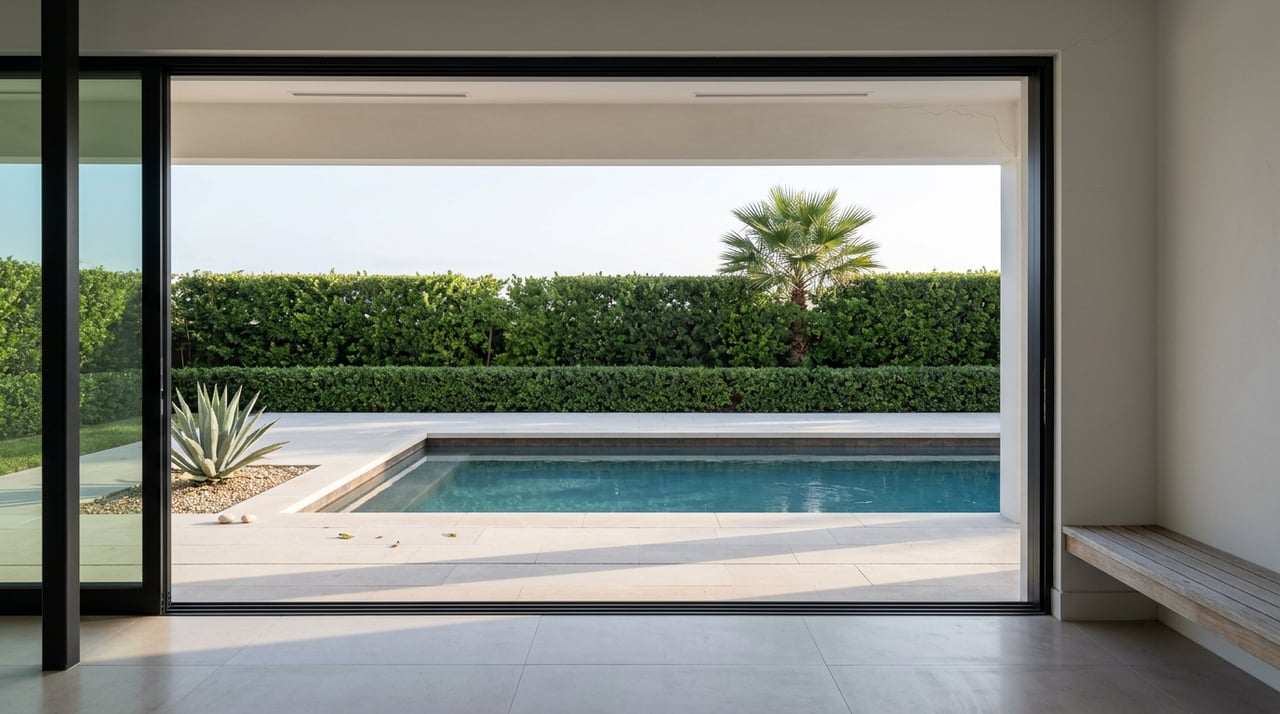
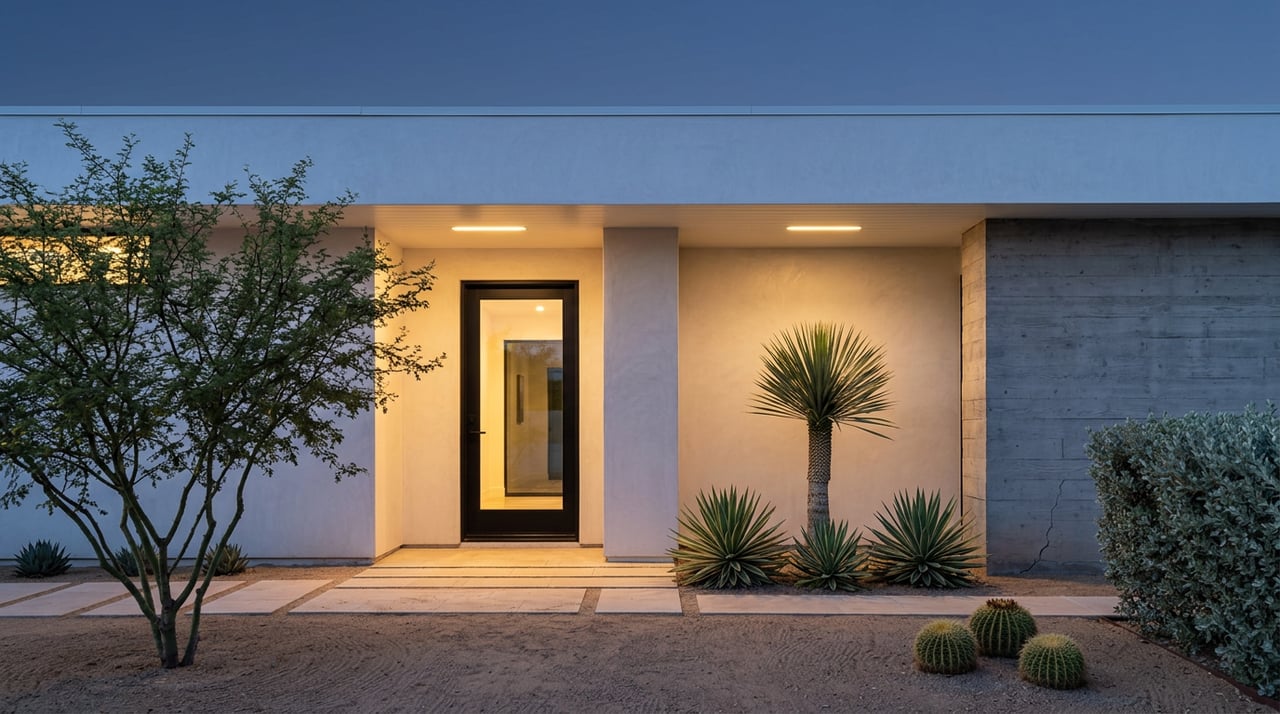
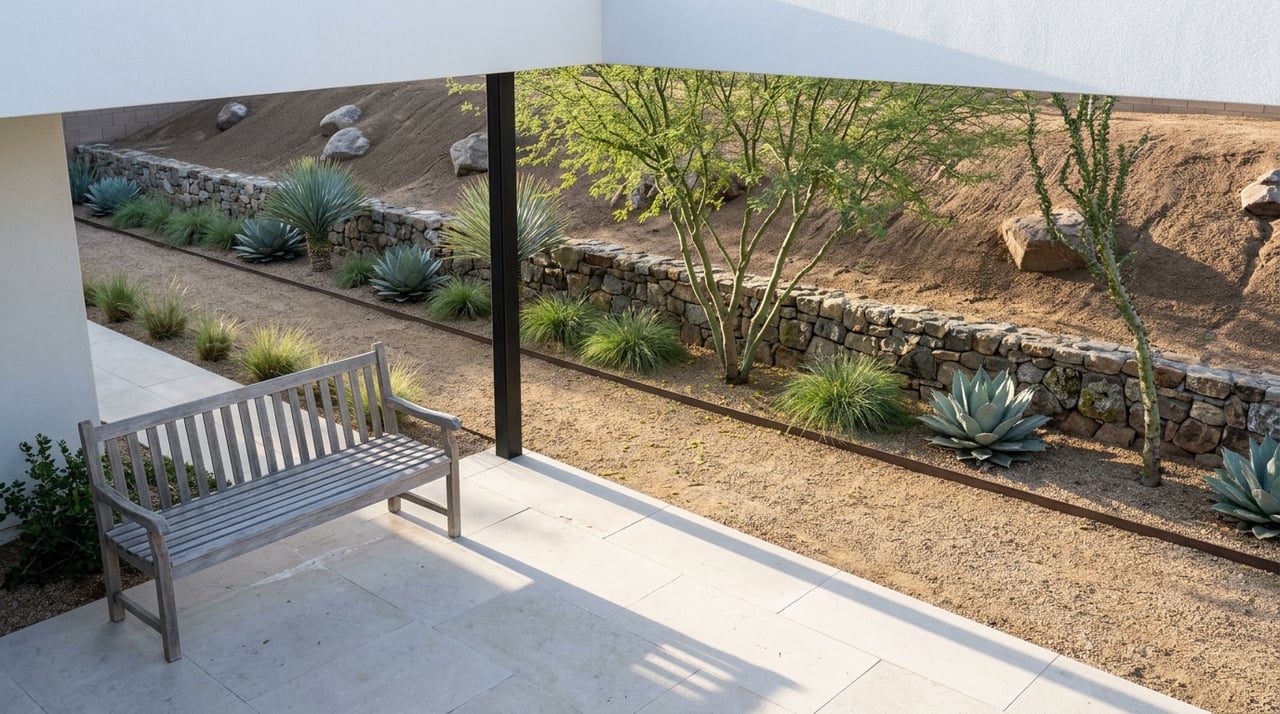
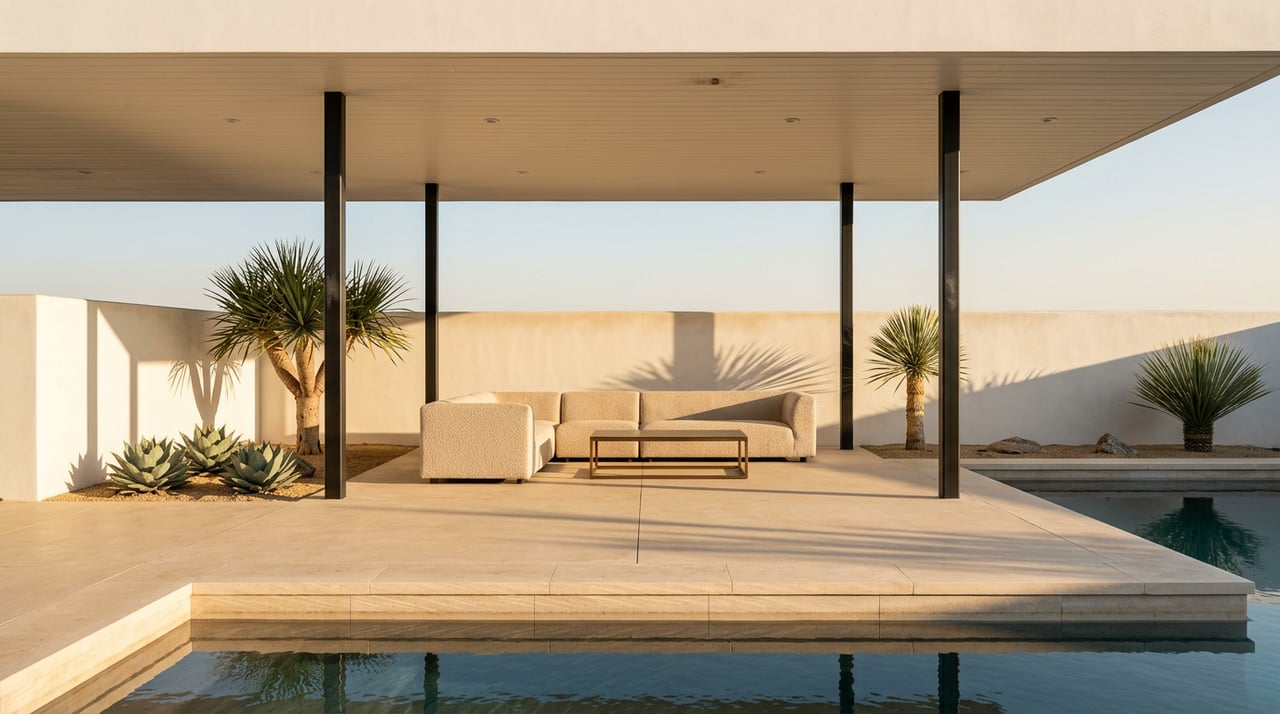
The architecture explains some of this patience. When developer Michael Meldman first brought Tom Fazio out to the barren stretch of desert that became Madison Club, the brief was to make the site look like nothing else in the Coachella Valley, according to Golf Digest's course profile. Fazio's crews cut channels into the desert floor wide enough for fairways and stacked the excavated earth into ridgelines, then trucked in mature trees so the course would read as established rather than newly built. The villas that followed lean on Addison Mizner's Mediterranean and Spanish Colonial Revival vocabulary, while custom estates range from contemporary desert forms to full haciendas. One of the more publicly documented examples is Apple executive Eddy Cue's estate inside the club, designed by the architecture firm Olson Kundig and frequently cited in design circles for its minimalist, glass-forward take on the desert retreat. That range of styles, built on a landscape this deliberately engineered, is part of why a homesite here isn't a quick flip. It's a design commitment first and a real estate transaction second.
If speed matters to you, that argument favors a finished home. If a discount and a longer runway are acceptable trade-offs, the land side of the market is where patience has historically been rewarded, though patience alone isn't a strategy without the design and construction team already lined up.
What the Closing Prices Actually Admit
Even inside the fast-moving, finished-home side of Madison Club, the headline numbers understate how much negotiation is happening.
Looking at the 12 months ending July 21, 2026, active custom-home listings carried a median asking price of about $1,809 per square foot. Homes that actually closed in that same window landed at a median of roughly $1,596 per square foot, a gap of roughly 13 percent between what sellers ask and what buyers end up paying. Three custom estates did close at 100 percent of their final asking price in that period, so full-price outcomes happen. But the median sale-to-final-list ratio across the period was 87.8 percent, the median sale-to-original-list ratio was 83.1 percent, and the softest deal on record closed at just 71.3 percent of its original list price.
That's a meaningful admission for a market this rarefied. A $16.5 million closing tells you what one buyer paid for one house. It doesn't tell you that the same seller, on the same street, might have started closer to $19 million or $20 million before the market corrected the ask downward. For anyone comparing recent Madison Club sales to a listing they're currently evaluating, the original list price is closer to an opening offer than a fair value estimate.
Comparing Madison Club To Anywhere Else Starts With Separating the Land From the Lifestyle
If you're weighing Madison Club against another gated address in La Quinta, whether that's The Hideaway, The Tradition, or a different private club altogether, the comparison only holds up once you separate three things that a single sale price bundles together: the physical home, the membership, and the build timeline if you're buying land.
Two listings at the same headline price can carry entirely different carrying costs once dues are confirmed directly with the club rather than pulled from a listing page. Two homesites at the same acreage can carry entirely different holding periods depending on how close they are to move-in ready versus how much design work remains. And two "recent sales" at the same price point can represent two very different negotiating stories, one that closed at full ask and one that took a 15 or 20 percent haircut to get there.
None of that shows up in a single number. It shows up when someone who tracks this specific gate walks a buyer through what each figure actually represents before an offer gets written. For a deeper look at how Madison Club's amenities and daily rhythm compare to the club community as a whole, our guide on buying inside Madison Club covers the process end to end, and our broader piece on La Quinta's private clubs puts Madison Club's structure side by side with its neighbors.
Two Direct Answers
Does buying a home at Madison Club automatically include club membership? No. Membership is a separate, limited allocation capped at 225 property owners, while the community has 193 homes built. Ownership and membership should be evaluated and confirmed as two distinct pieces of the purchase.
Are Madison Club homesites as negotiable as finished homes? They trade on a longer timeline rather than a deeper discount. Recent examples show homesites sitting well over six months, in one case over a year, before selling, which changes the negotiating posture and the patience required compared to a finished estate.
If you're comparing Madison Club against another gated address in the valley and want the dues, the timeline, and the architecture pedigree confirmed before you write an offer, Rich Nolan works this exact market from the inside the gate outward. Reach out through our buyer resources to start with a clear picture of what a specific property actually costs to own, not just what it's listed for.