Wondering where to start when you want to experience Palm Springs mid-century design beyond the postcards? You are not alone. With so many famous streets, architect names, and house styles, it can be hard to know which neighborhoods deserve your time and how to explore them in a way that feels informed and respectful. This guide will help you map out a smart, design-focused tour of Palm Springs mid-century neighborhoods, from iconic residential tracts to commercial corridors and local history resources. Let’s dive in.
Why Palm Springs Mid-Century Design Stands Out
Palm Springs treats architecture and neighborhood identity as a real part of the city’s story. The city’s General Plan describes Palm Springs as a unique modern urban village and emphasizes preservation of its historical, architectural, recreational, and environmental quality.
That matters when you are exploring in person. Palm Springs is widely known for Mid-Century Modern architecture, and the city’s historic survey covers resources from Native American settlement through 1969. The city also recognizes 52 organized neighborhoods, which makes neighborhood context an important part of understanding what you are seeing.
Start With the Right Mindset
The best Palm Springs architecture tours are not about rushing from one famous address to the next. They are about learning how design, climate, and lifestyle came together to shape different parts of the city.
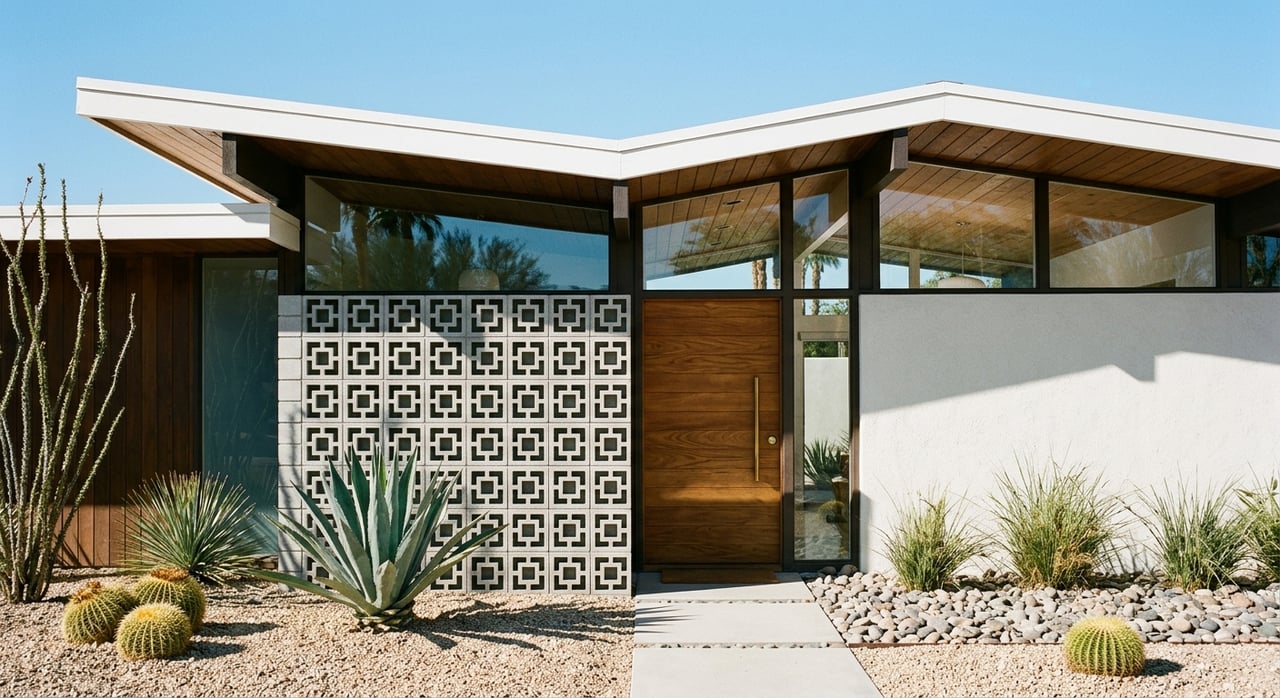
If you approach each neighborhood as its own chapter, the experience becomes much richer. You will start to notice recurring details like butterfly roofs, breezeways, clerestory windows, desert landscaping, and the relationship between homes and mountain views.
Best Mid-Century Neighborhoods to Explore
Twin Palms
Twin Palms is one of the smartest first stops if you want a clear introduction to Palm Springs modernism. The neighborhood organization describes it as the first truly mid-century modern housing tract in Palm Springs, designed by William Krisel and built by the Alexander Construction Company.
As you walk or drive through, look for the design language that made the tract influential. Original features included open carports, clerestory windows, exposed concrete block, breezeways, and butterfly roofs. Even if individual homes have changed over time, the neighborhood still helps you understand the clean, climate-responsive thinking behind the era.
What to look for in Twin Palms
- Butterfly rooflines
- Breezeways connecting outdoor and indoor spaces
- Clerestory windows for light and privacy
- Carports integrated into the overall architecture
- Repetition with variation across the tract
Vista Las Palmas
Vista Las Palmas is one of the city’s most recognizable modern neighborhoods. The Palm Springs Historical Society describes it as the trendy mid-century neighborhood once nicknamed the “Beverly Hills of Palm Springs,” with Alexander homes and the Palmer/Krisel partnership helping define its look.
This is a great place to study how tract housing in Palm Springs could still feel glamorous and highly individual. As you explore, pay attention to how the homes sit on their lots and how landscaping, setbacks, and roof forms create a strong visual rhythm from the street.
Deepwell Estates
Deepwell Estates offers a slightly different experience. According to the Palm Springs Historical Society, the neighborhood includes work by E. Stewart Williams, Donald Wexler, and Hugh Kaptur, along with well-manicured properties and attractive desert landscaping.
For design-minded visitors, Deepwell Estates is a reminder that Palm Springs modernism is not one single look. You may notice a more layered mix of architectural expression here, paired with mature landscaping and a strong sense of polish.
Old Las Palmas and the Movie Colony
If you want context beyond pure mid-century tracts, add Old Las Palmas and the Movie Colony to your route. These neighborhoods help show how Palm Springs evolved over time and how architectural styles overlapped rather than arriving all at once.
The Palm Springs Historical Society notes that Old Las Palmas began developing in the late 1920s, while the Movie Colony originated in the 1930s around El Mirador and became closely tied to Hollywood residents. In both areas, you can see a blend of Spanish Colonial Revival and modernist architecture, which makes them useful counterpoints to later mid-century neighborhoods.
Do Not Skip South Palm Canyon Drive
Palm Springs modernism is not only residential. If this is your first architecture-focused visit, South Palm Canyon Drive deserves a place on your list.
The Palm Springs Historical Society’s “Giants of Architecture” route describes South Palm Canyon Drive as the most photographed and historically significant concentration of midcentury modern commercial buildings. That makes it one of the easiest ways to see how modern design shaped the city’s public-facing identity, not just its homes.
Why South Palm Canyon Drive matters
- It is ideal for first-time explorers
- It shows mid-century design at a commercial scale
- It adds context to the city’s broader architectural identity
- It can work well as a walk or a drive
How to Tour Respectfully
Palm Springs neighborhoods are living residential areas, not museum sets. The best tours balance curiosity with basic courtesy.
The Palm Springs Historical Society asks visitors to respect resident privacy, stay off private property, and remain on the streets. Tour operators also commonly advise wearing comfortable shoes, bringing water, and planning for sun protection, especially since some tours can run two to three hours without restroom facilities.
Free street parking is typically used for tours, though arrangements may change during hot weather. In practical terms, that means you should keep your day flexible, pace yourself, and expect desert conditions to shape your experience.
Simple neighborhood etiquette
- Stay on public streets and sidewalks
- Do not enter private property
- Respect resident privacy
- Bring water and sun protection
- Wear comfortable walking shoes
- Plan for limited restroom access on some tours
Use Public Resources to Go Deeper
If you want more than a casual drive-through, Palm Springs offers strong public resources for architectural research. The city’s Accessing the Past project includes a searchable online database of historical documents, photos, and maps.
That can be especially useful if you enjoy comparing what a neighborhood looks like today with earlier development patterns. It is also a smart tool if you want to better understand the local history behind a street, a tract, or a property type.
Visit the Architecture and Design Center
The Palm Springs Art Museum’s Architecture and Design Center is a valuable stop for anyone interested in local design culture. The museum describes the building itself as a classic midcentury International Style structure by E. Stewart Williams.
That means the visit offers two layers of value. You can engage with architecture and design programming while also experiencing an important building firsthand.
Consider a Guided Tour
If you prefer expert context, the Palm Springs Historical Society offers walking, biking, and private vehicle tours covering neighborhoods and downtown. Its Village Green tour is a free guided history walk through four historic buildings, including the McCallum Adobe, Cornelia White House, Ruddy’s General Store, and the Oasis.
Guided tours can help you connect names, dates, and design features more quickly than a self-guided route. They are also helpful if you are trying to fit a lot into a short visit.
Plan Around Modernism Week
Modernism Week is one of the city’s biggest architecture and design events. Its FAQ describes the organization as dedicated to the education and celebration of modernist architecture, design, and culture, and the annual festival program includes public tours, lectures, films, and ticketed access to homes and buildings.
If your timing is flexible, planning your visit around Modernism Week can open doors that are not usually available. It is one of the best ways to deepen your understanding of Palm Springs architecture in a short period of time.
Know That Some Sites Need Special Access
Not every famous property is available for casual visits. Frey House II, for example, is not open for regular visiting hours.
According to the Palm Springs Art Museum, access is available through its designated tour operator and during Modernism Week in February and October. If a specific landmark is on your list, check the official access rules before you build your itinerary.
Tips for Buyers and Architecture Collectors
If you are exploring neighborhoods with a real estate lens, design appreciation is only part of the picture. Provenance, historic status, and local designation tools can all matter when you are evaluating an architecturally significant home.
The City of Palm Springs maintains historic-designation tools, a list of historic sites and districts, and a Historic Site Preservation Board that identifies, nominates, and recommends potential historic resources. The city also distinguishes between Class 1, Class 2, Class 3, Class 4, and historic district resources.
For a more visual overview, the Palm Springs Preservation Foundation publishes a self-driving guide with maps for architecturally significant buildings. Together, these resources can help you better understand how a home fits into the larger architectural story of Palm Springs.
A Simple One-Day Route
If you want an easy starting plan, keep it simple and focused. You do not need to see everything in one trip.
Suggested first-day itinerary
- Start in Twin Palms for classic tract modernism
- Continue to Vista Las Palmas for one of the city’s signature mid-century neighborhoods
- Drive through Deepwell Estates to compare architectural expression and landscaping
- Add Old Las Palmas or the Movie Colony for earlier neighborhood context
- Finish on South Palm Canyon Drive for commercial mid-century landmarks
This route gives you a broad but coherent introduction. It also helps you compare residential and commercial modernism in a way that makes the city’s design legacy easier to read.
Palm Springs rewards slow looking. When you take time to understand the neighborhoods, the architects, and the city’s preservation culture, you start to see more than beautiful houses. You see a place that has built real civic identity around design, history, and setting.
If you are exploring Palm Springs architecture with an eye toward buying, selling, or understanding a home’s design lineage, working with a local expert can make the experience far more meaningful. For a thoughtful, design-first perspective on architecturally significant homes in the Coachella Valley, schedule a consultation with Rich Nolan.
FAQs
What is the best first neighborhood for exploring Palm Springs mid-century homes?
- Twin Palms is a strong starting point because it is described by the neighborhood organization as the first truly mid-century modern housing tract in Palm Springs.
Which Palm Springs neighborhood is most associated with iconic Alexander homes?
- Vista Las Palmas is one of the most recognizable areas for Alexander homes and the Palmer/Krisel design partnership.
Where can you see Palm Springs mid-century commercial architecture?
- South Palm Canyon Drive is identified by the Palm Springs Historical Society as the most photographed and historically significant concentration of midcentury modern commercial buildings.
How should you behave when touring Palm Springs neighborhoods?
- Stay on the streets, respect resident privacy, avoid private property, and prepare for heat with water, sun protection, and comfortable shoes.
What Palm Springs resources help with architecture research?
- Useful public resources include the city’s Accessing the Past database, the Palm Springs Art Museum’s Architecture and Design Center, city historic-resource tools, and Palm Springs Historical Society tours.
Can you visit Frey House II on your own?
- No. The Palm Springs Art Museum says Frey House II is not open for regular visiting hours and is accessed through official tour options and select Modernism Week opportunities.